Deck Builder in Hampton, VA
Pressure-treated decks, steps and railings built on solid footings and flashed correctly where they meet the house.
Building a Deck That Lasts in Tidewater Weather
A deck is a second living room that happens to sit outside, and it is also a structure that holds people, tables and sometimes a grill, so it has to be built to a standard. In Hampton Roads that means designing for wet ground, high humidity, strong sun and a lot of storms.
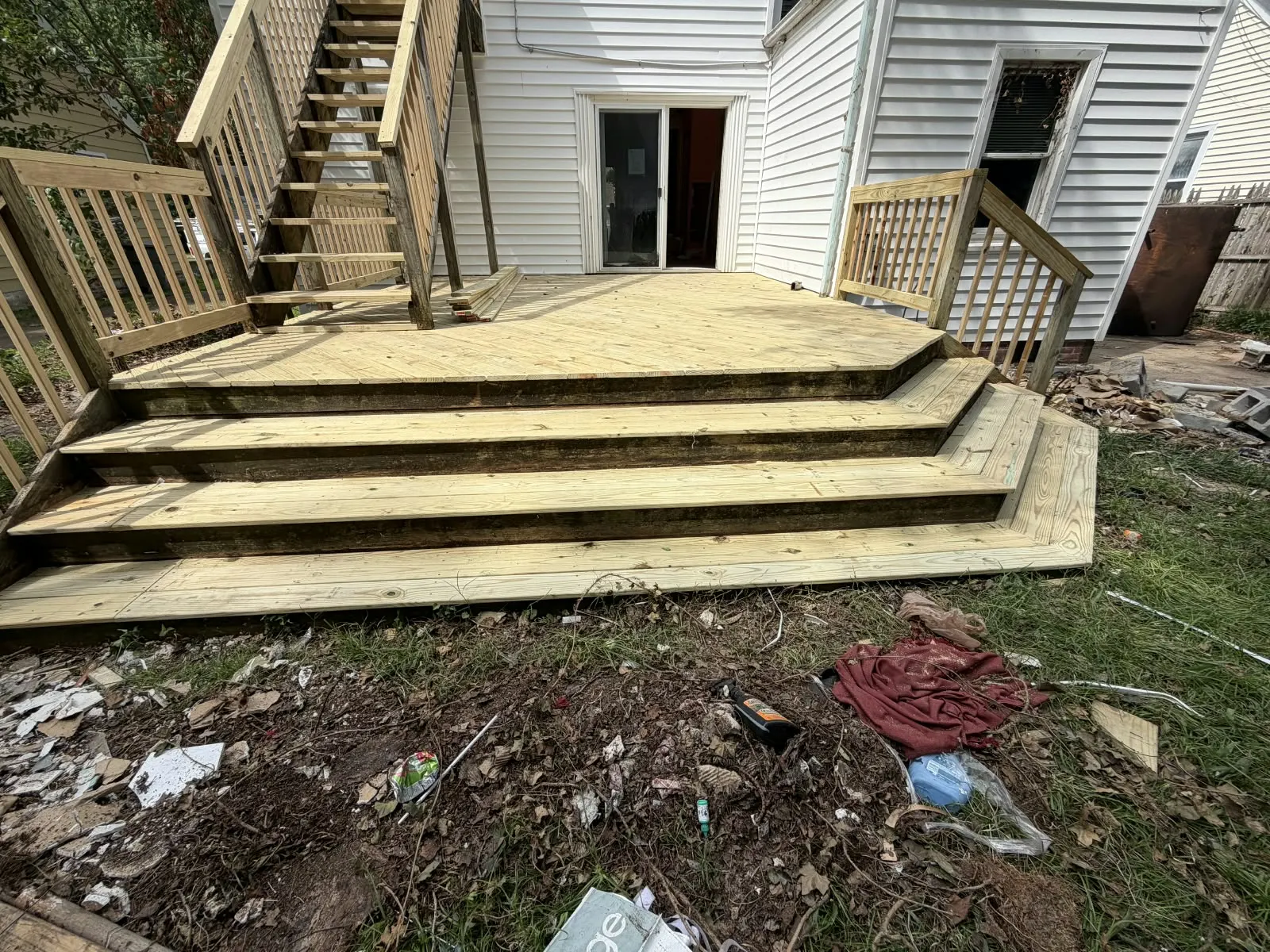
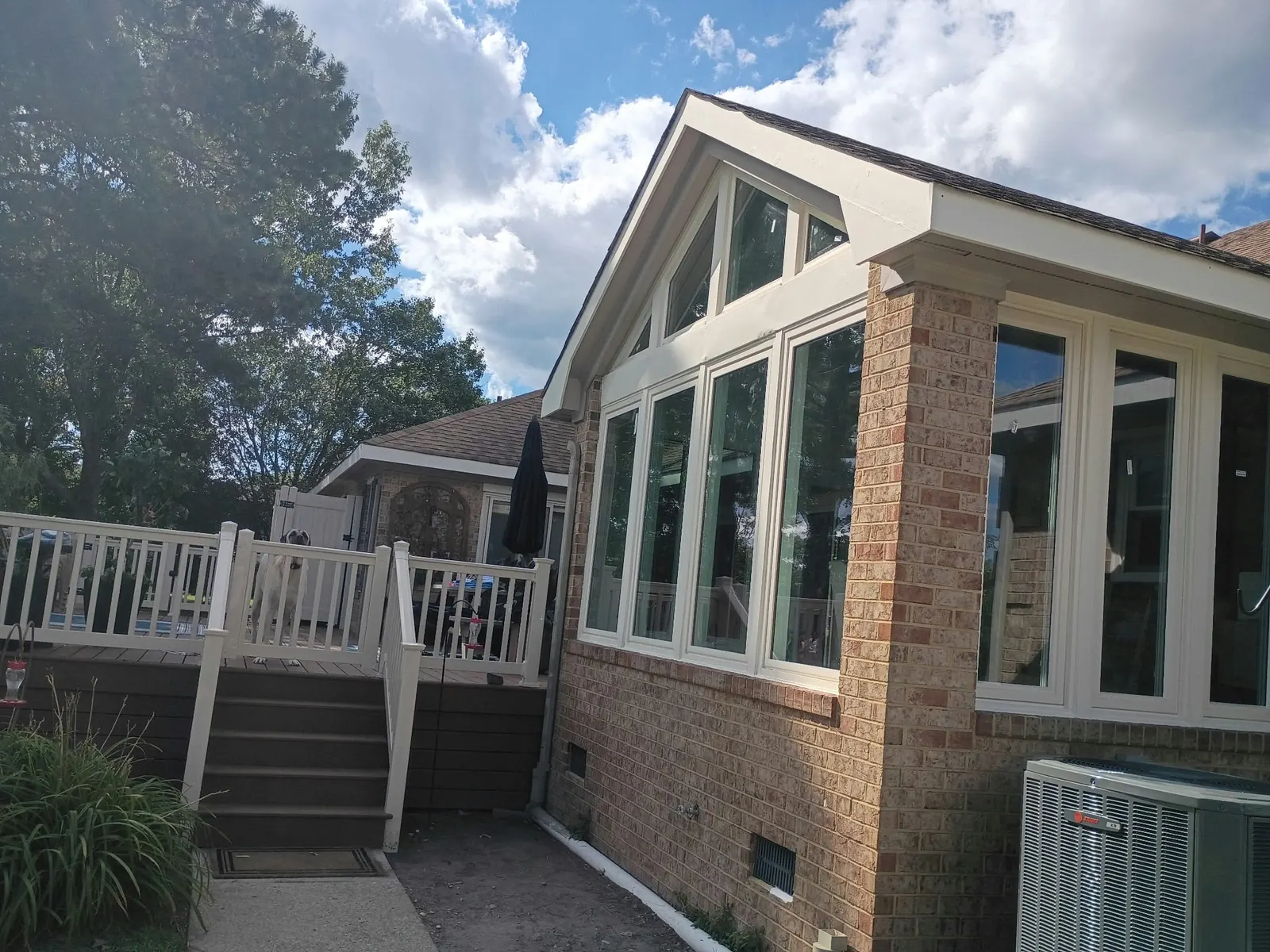
We begin with the structure: footings that reach stable ground, posts and beams sized for the span, joists spaced for the decking and a ledger board flashed and bolted to the house. Then the visible parts follow: the decking boards, the stairs and the rail. The wide stair and landing shown on this page, in pressure-treated lumber, is the type of project where the steps are as important as the platform.
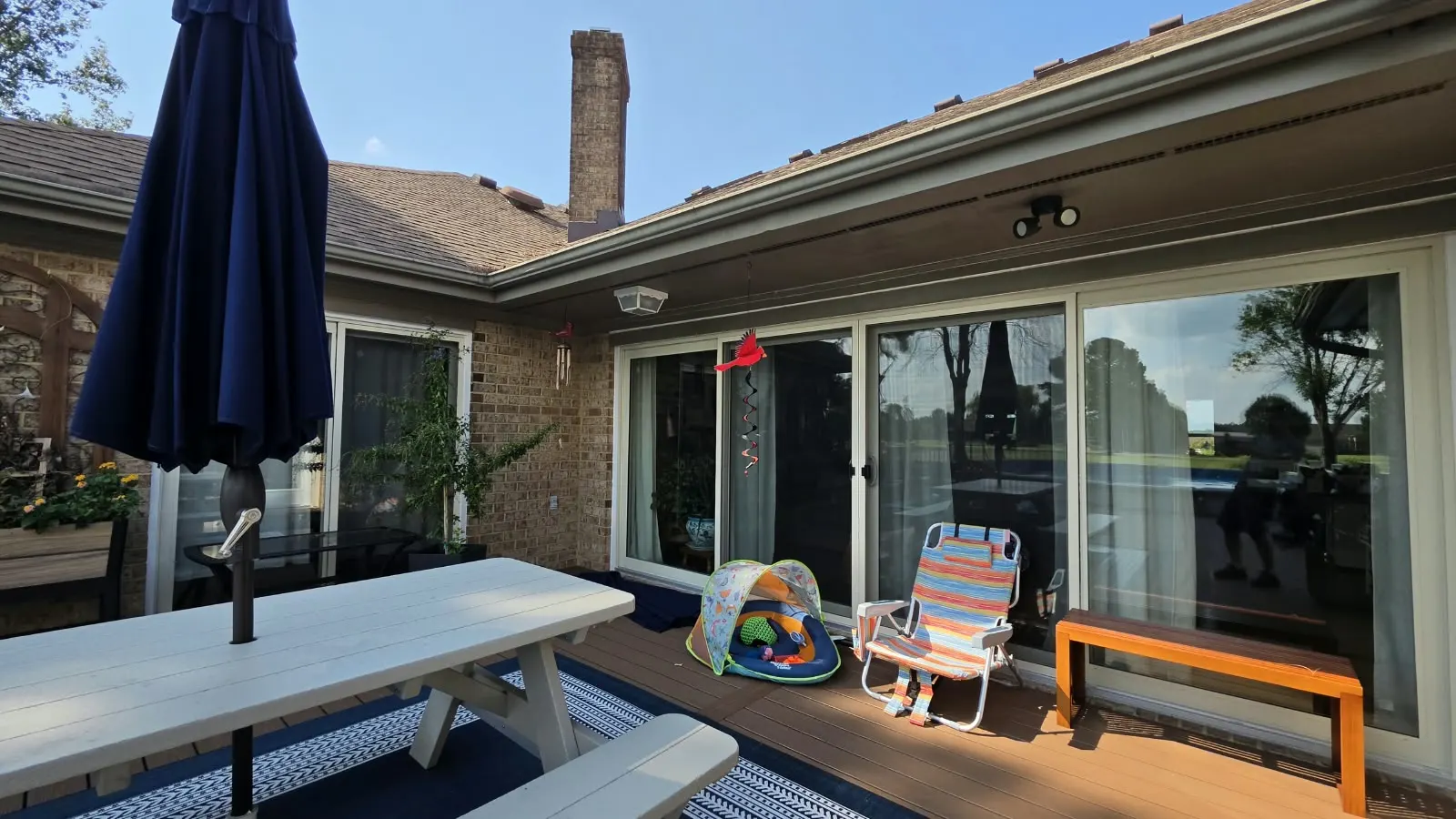
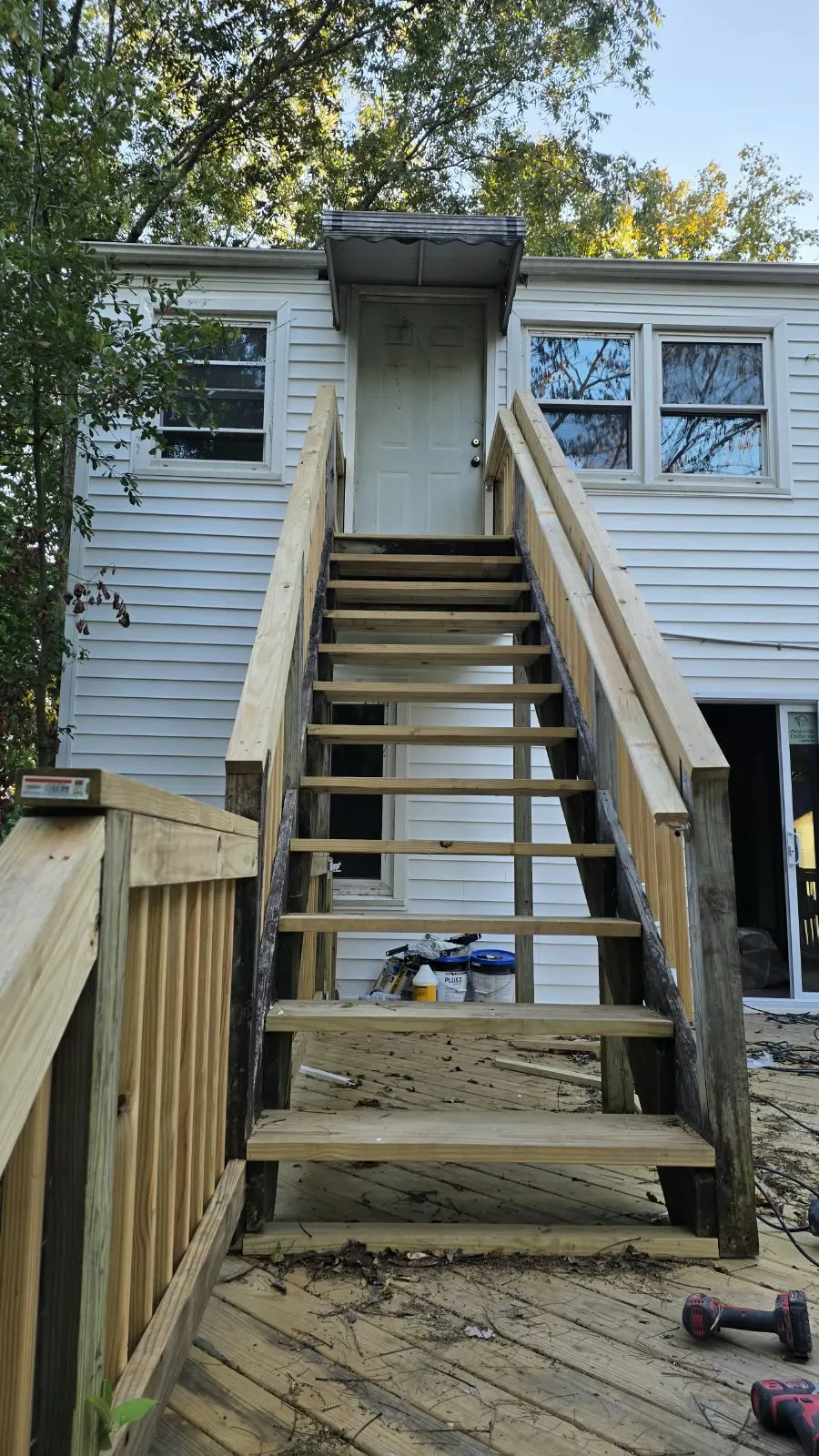
We also look at how the deck will be used. A deck by a sliding door wants a clean transition and a roof or covering for some shade. A deck off a second-story entry needs strong stairs and a railing that meets code.
Decks and Stairs
Reasons to Build or Rebuild a Deck
You want more outdoor living space
A deck near the kitchen or sliding door extends the house in good weather.
Your old deck feels unsafe
Bouncy boards, wobbly rails and soft posts mean the structure should be inspected.
Stairs are rotted or too steep
Stairs get the most wear and are often the first part to fail.
The ledger or flashing is failing
Water behind a ledger board rots the house rim joist and the deck connection.
You are selling or refinancing
A deck that passes inspection protects the sale and the value.
How We Build a Deck
- Design and layoutWe discuss size, shape, stairs and railing, mark the footprint and confirm clearances and any required permits.
- Set the footings and postsFootings are placed on stable ground, posts are set plumb and cut to height.
- Frame the deckBeams, joists and the flashed, bolted ledger board are installed, with blocking and bracing as needed.
- Decking and stairsDecking boards are fastened with proper spacing and stairs are cut with consistent rise and run.
- Railings and finishRailings, balusters and trim are installed and the deck is cleaned. We recommend sealing once the wood is ready.
What Affects Deck Cost
A deck’s price comes from its size and structure, and from a few choices people often overlook.
- Square footage and height. A larger or higher deck needs more footings, beams and material.
- Decking material. Pressure-treated lumber costs less than composite, which has lower maintenance.
- Stairs and railings. Wide stairs and long railings can add as much labor as the platform.
- Attachment to the house. A ledger on brick or siding needs special flashing and fastening.
- Permits and inspections. Permit fees and required inspections are part of the process in most cities.
Why Choose 757 Contracting to Build Your Deck
We build decks as carpenters. That means true layouts, tight joints, solid stairs and clean cuts instead of a deck that looks fine for a season and then loosens.
Because we handle remodeling too, we can tie the deck into a new door, window or sunroom as one project.
Where We Offer Decks
We build and repair decks in Hampton and across Hampton Roads, from rear decks off older brick houses to covered patios.
Decks FAQ
What is a deck built from?
The decks in our photos are pressure-treated lumber, which resists rot and insects and is a common choice in Hampton Roads. Composite decking is another option with less maintenance and a higher price. We help you compare based on budget and how much upkeep you want.
Do decks need a permit in Virginia?
Most do. Decks that are attached to the house, raised above a certain height or larger than a threshold typically need a building permit and inspections. We explain what your city expects and handle the permit process.
How are deck footings handled in sandy coastal soil?
Footings must reach below the frost line and bear on stable soil. In the soft, wet ground typical of Tidewater, we pay extra attention to footing size and drainage so the deck does not settle. The ledger that attaches the deck to the house must be flashed and bolted correctly.
Can you repair or rebuild my existing deck?
Yes. Replacing worn boards, rotted joists and loose railings is common work, and old stairs are often the first thing to rebuild. We inspect the framing under the deck, because the visible boards are not the whole story.
How do I keep a wood deck from rotting?
Keep the boards clean, let air move under the deck and seal or stain the wood on a regular schedule. Pressure-treated wood lasts but still needs maintenance, especially in humid summers.
Request A Free Deck Quote
Tell us how you want to use your deck and we will visit, measure and give you a free quote.